
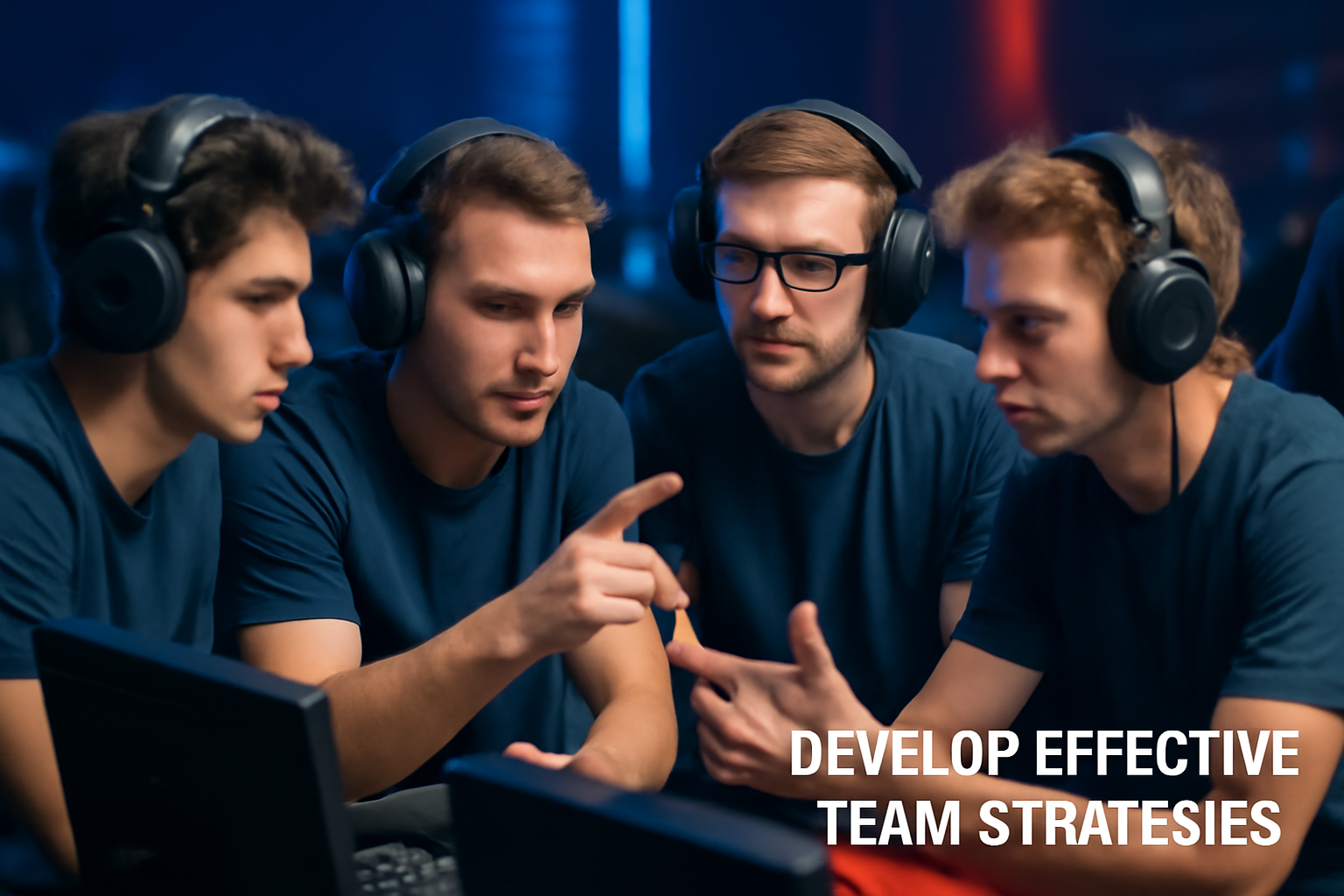
In esports, where communication, coordination, and individual talent all affect a team’s performance, it’s crucial to have a strong and unified team strategy. A well-organized approach to team development can clarify roles, facilitate better teamwork, and improve overall performance. This guide provides steps to create effective strategies for esports teams, focusing on defining roles, setting goals, and fostering continuous improvement.
1. Assess Team Strengths and Weaknesses
The first step in developing an effective strategy is evaluating each team member’s strengths and areas for improvement. In esports, this assessment should cover technical skills, game knowledge, communication, and decision-making abilities.
Strengths and Weaknesses Table:
| Player Name | Strengths | Areas for Improvement |
|---|---|---|
| Player A | High mechanical skill, quick reflexes | Needs to improve teamwork |
| Player B | Great at planning and map awareness | Needs to improve aim accuracy |
| Player C | Good positioning and strong communication | Doesn’t play aggressively |
| Player D | Good teamwork, flexible roles | Needs to improve decision-making under pressure |
2. Set Clear and Achievable Team Goals
Defining goals is essential for maintaining focus and ensuring that progress is being made. Goals should be specific, measurable, achievable, and aligned with both individual performance and team synergy.
- SMART Goals: Goals that are Specific, Measurable, Achievable, Relevant, and Time-bound.
- Short-Term Goals: Focus on improving specific aspects such as communication or individual skill.
- Long-Term Goals: Aim for tournament victories or improving rankings.
Example Goals for an Esports Team:
- Short-Term Goal: Improve team communication under pressure within two weeks.
- Long-Term Goal: Finish in the top three in the next major tournament.
3. Define Roles and Responsibilities
Each player should have a clearly defined role that aligns with their strengths and playstyle. This helps to ensure that every member contributes to the strategy without overlapping responsibilities.
Roles and Responsibilities Table:
| Role | Responsibilities | Assigned Player |
|---|---|---|
| Team Captain | Lead the team, make strategic calls, maintain morale | Player A |
| Strategist | Analyze opponent strategies, make play calls, adapt tactics | Player B |
| Damage Dealer | Maximize damage output in engagements | Player C |
| Support/Utility | Provide crowd control, healing, or utility in team fights | Player D |
4. Foster Good Communication and Teamwork
In esports, communication is the backbone of effective coordination. Team members must communicate clearly and efficiently, particularly in high-pressure situations.
Tips for Improving Team Communication:
- Use Voice Chat: Enable real-time callouts and coordination.
- Establish Key Phrases: Create unique phrases for specific strategies like “split push” or “bait and switch.”
- Pre-Match Discussions: Go over the game plan and individual responsibilities.
5. Emphasize Adaptability and Flexibility
Esports games are fast-paced, and strategies must be flexible. Rigid plans may fail when opponents adapt quickly, so it is important to cultivate a mindset of adaptability.
- Analyze Opponents: Study the opponent’s playstyle and adjust accordingly.
- In-Game Adjustments: Be prepared to modify strategies based on match flow.
- Cross-Role Training: Encourage players to try different roles to understand team dynamics better.
Adaptability Bullet Points:
- Regularly review team performance to refine strategies.
- During scrims, encourage players to experiment with different roles.
- Focus on being adaptable in various maps and game situations.
6. Maintain High Morale and Motivation
Motivating the team is essential, especially during tough matches. Keeping spirits high can help players stay focused and avoid burnout.
Ways to Boost Team Motivation:
- Provide Regular Feedback: Offer praise for good performance and constructive criticism for improvement.
- Celebrate Achievements: Recognize individual and team accomplishments to strengthen team morale.
- Foster Mental Resilience: Teach the team how to handle losses and use them as learning experiences.
Techniques for Keeping the Team Motivated:
- Offer rewards for meeting short-term goals.
- Organize team-building activities to strengthen camaraderie.
- Ensure there’s designated downtime to prevent burnout.
7. Focus on Continuous Improvement
Esports teams must constantly evolve to stay ahead of the competition. Regular performance reviews, scrims, and data analysis will help identify areas for improvement and refine strategies.
Continuous Improvement Process:
- Scrims (Practice Matches): Hold regular practice matches to test new strategies and tweak existing ones.
- Analyze Game Data: Use analytics tools to review past matches and identify areas to improve.
- Individual Coaching: Provide personalized feedback to help players enhance their specific skills.
Continuous Improvement Steps:
- Evaluate: Review what worked well and what didn’t after each match.
- Act: Adjust the strategy based on performance analysis.
- Monitor: Track the effects of changes in future games.
- Repeat: Continuously refine strategies based on evolving performance.
Conclusion
Creating effective team strategies in esports requires careful planning, strong teamwork, and a flexible approach. By assessing individual strengths, setting clear goals, defining roles, fostering communication, and continuously improving, esports teams can achieve consistent success. In the end, a culture of adaptability, motivation, and growth is the key to long-term success for any esports team.
